
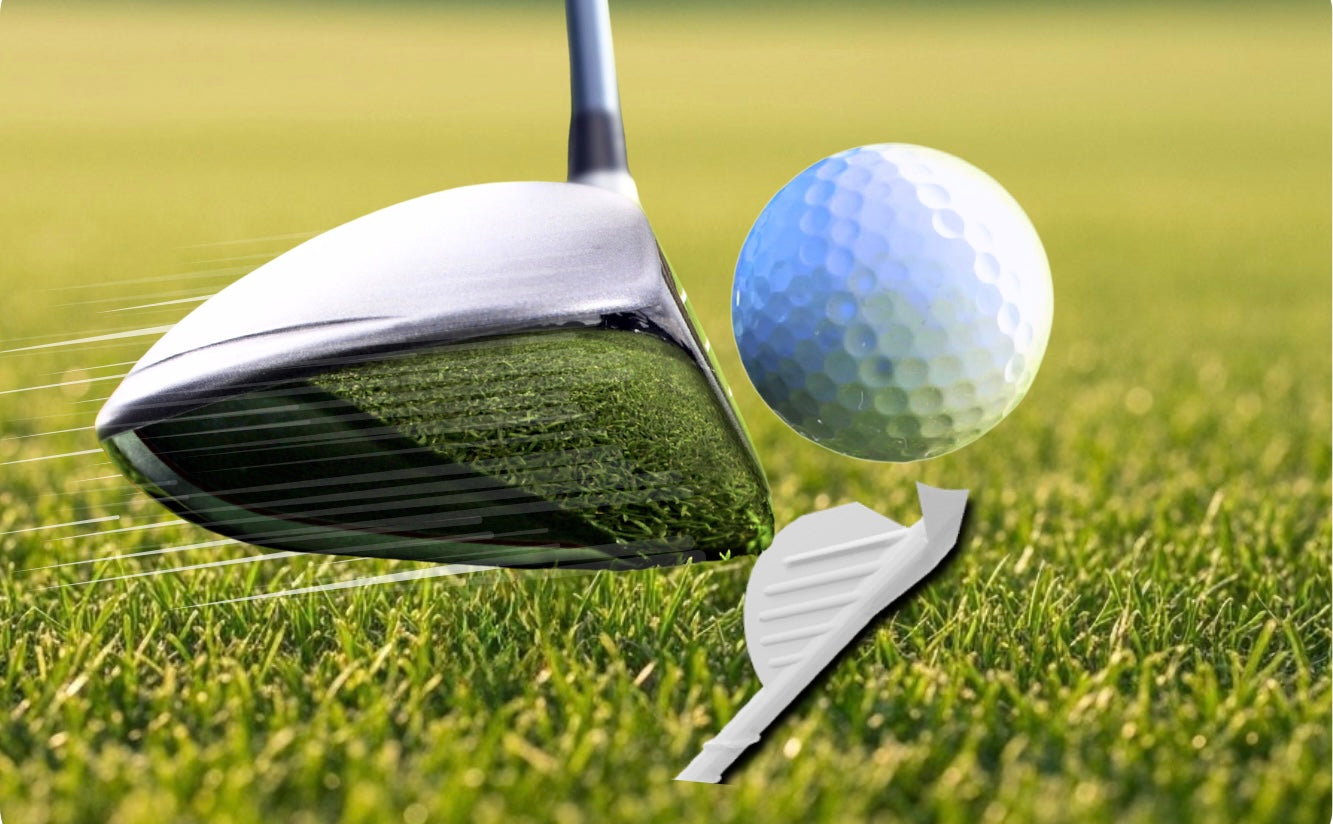
A driver can cost hundreds. A shaft fitting can take hours. A swing change can take months. Yet one of the easiest places to lose speed, spin control, and directional consistency is still sitting under the ball. Low friction golf tees exist for a simple reason: the tee should support the ball, not interfere with the strike.
That sounds obvious, but traditional tees still create resistance at impact. The clubhead is moving fast, and any extra contact between the driver and the tee can alter what happens in the first instant after collision. That matters more than most golfers realize. A few small inefficiencies at the tee can mean more spin, less speed, wider dispersion, and shorter drives.
Why low friction golf tees matter
The goal at impact is efficient energy transfer. When you hit a drive well, you want the clubface interacting with the ball as cleanly as possible. The tee's job is temporary support. Once it starts adding drag, deflecting the clubhead, or increasing friction through contact, it becomes a performance limiter.
This is where low friction golf tees separate themselves from standard wood and plastic designs. They are engineered to minimize tee interference, which can help preserve ball speed and reduce unwanted spin. For golfers chasing more carry, more roll, and tighter starting lines, that is not a cosmetic difference. It is a mechanical one.
A lot of golfers spend time chasing launch monitor gains through swing thoughts when the easier fix is removing resistance from the strike itself. You do not need to rebuild your move to benefit from cleaner contact conditions.
What friction at the tee actually does
At driver speed, small contact issues get magnified. If the tee grips the ball too long, catches more of the clubhead, or creates excess resistance as the club passes through, it can affect launch conditions in ways that show up immediately.
The first issue is ball speed. More interference can mean less efficient transfer at impact. Even slight losses matter because driver performance is built on speed preservation. If your setup costs you speed before the ball even leaves the face, that is distance you never get back.
The second issue is spin. Tee interaction can contribute to extra backspin or side spin, especially when the strike is not perfectly centered. More spin can balloon the ball, flatten rollout, and exaggerate curvature. For many players, that means drives that look playable but finish shorter and farther offline than they should.
The third issue is dispersion. Golfers usually blame swing path or face angle for every missed fairway, and those are still the main levers. But equipment interference adds inconsistency. If impact conditions change from swing to swing because the tee is not getting out of the way efficiently, your pattern gets wider.
The design difference in low friction golf tees
Not every tee marketed as performance-focused is truly engineered. Some simply add color, durability, or height markers. Those features can be useful, but they do not automatically reduce interference.
A true low-friction tee is designed around impact mechanics. That means reducing the amount of surface area resisting the ball and limiting how much of the tee structure gets involved during the strike. The best designs do this with features that actively control contact rather than just making the tee lighter or more flexible.
This is why advanced tee geometry matters. Split support structures can reduce the contact zone. Forward-leaning designs can improve the way the ball is presented at address and through impact. Stabilizing fins or similar structures can help hold the tee in position while still allowing a cleaner release. Those are not styling decisions. They are engineering decisions tied directly to launch performance.
Graavee built its tee technology around exactly that principle: reduce interference, preserve speed, and optimize what happens in the most important fraction of a second in the swing.
What kind of golfer benefits most
The short answer is almost everyone who hits a driver.
If you swing fast, low friction matters because higher speed increases the consequences of poor tee interaction. If you swing moderately, it still matters because you have less raw speed to waste in the first place. If you struggle with spin, a cleaner strike can help reduce one source of excess launch inefficiency. If you struggle with consistency, reducing variables at impact gives you a better chance of repeating useful results.
This is especially relevant for golfers who are already fit into the right driver head and shaft but still feel like they are leaving yards on the table. Many players assume the answer must be a more expensive club or a more aggressive swing. Sometimes the smarter move is fixing the support point under the ball.
There is a practical side to this too. A tee is one of the few pieces of equipment you can change immediately, test on the same range session, and evaluate without making your game more complicated.
What results should you realistically expect?
This is where a lot of golf marketing goes soft. The honest answer is that results depend on swing speed, strike quality, spin profile, and how inefficient your current tee setup is.
A player with excessive spin and a conventional tee that creates a lot of interference may see measurable gains in distance and tighter dispersion. A player who already delivers the club efficiently may see smaller but still meaningful improvements in speed retention and consistency. The point is not that every golfer gets the exact same jump. The point is that reducing friction removes a known inefficiency.
And that is the right way to think about performance equipment. It should not promise magic. It should remove waste.
For gear-conscious golfers, that distinction matters. Better results come from stacking small advantages - lower drag, cleaner launch, less spin waste, tighter start lines. A low-friction tee fits that model because it targets the strike before the ball has a chance to lose efficiency.
Low friction golf tees vs traditional tees
Traditional wood tees are simple and familiar, but they were never engineered as high-performance impact tools. They hold the ball up and then break, bend, or resist depending on the strike. Plastic tees last longer, but durability alone does not solve the friction problem.
Low friction golf tees are built with a different objective. Instead of acting as passive accessories, they are optimized to reduce the negative effect a tee can have at impact. That means less drag, less unwanted interaction, and a better opportunity for the clubface to do its job.
There are trade-offs. Some golfers need a round or two to get comfortable with a new visual profile at address. Others may prefer a specific height or turf feel. But those are adjustment issues, not performance drawbacks. Once the focus shifts from habit to ball-flight results, the value becomes much easier to see.
How to evaluate a performance tee the right way
Do not judge it by how it looks in your hand. Judge it by what the ball does.
Start with a consistent driver setup and hit enough shots to remove the noise of one or two swings. Pay attention to launch, peak height, curvature, carry, rollout, and starting direction. If you have launch monitor access, look closely at ball speed, backspin, side spin, and dispersion patterns.
The key is comparing strike outcomes, not making guesses based on feel alone. Some tees can feel different without producing better numbers. Others may feel unusual at first yet produce tighter windows and better speed retention almost immediately.
That is the standard serious golfers should use with any piece of equipment. If it improves the conditions of impact, it belongs in the bag.
The overlooked truth about tee performance
Golfers obsess over face technology, carbon crowns, and spin profiles, and they should. Those things matter. But if the ball starts from a flawed support system, the rest of the equation is already compromised.
That is why low friction tees deserve more attention than they usually get. They address a part of the strike most brands ignored for decades. And once you understand how much speed and spin can be influenced by tee interference, it becomes hard to look at a standard tee the same way again.
The best equipment changes are not always the loudest ones. Sometimes they are the ones that remove a hidden problem you have been swinging around for years. If you want more from your driver without rebuilding your swing, start with the part of the setup that should never have been working against you in the first place.