
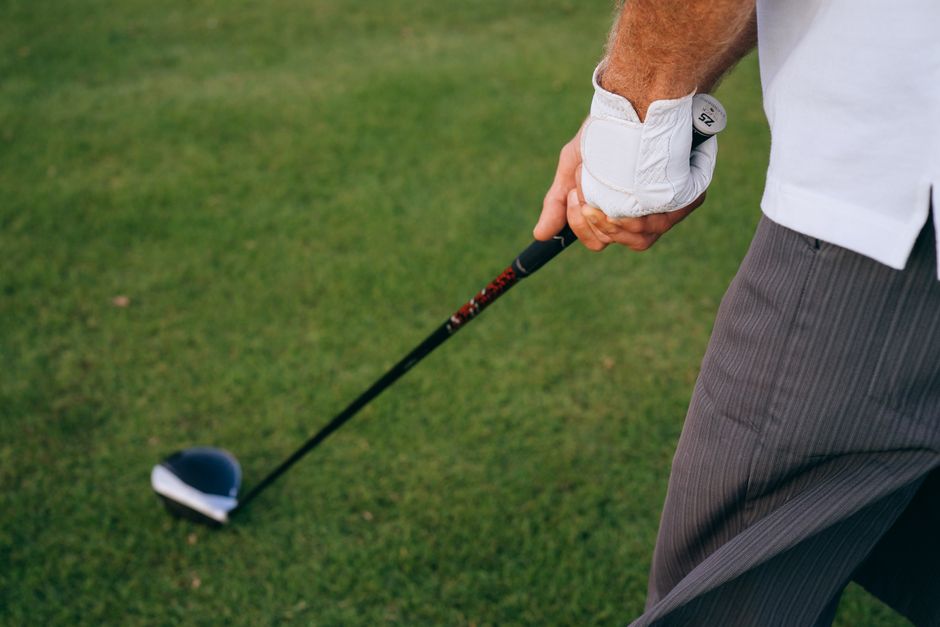
Photo by Mikhail Nilov on Pexels
You crush your driver right in the center of the face, watch the ball climb — and it just… falls out of the sky 15 yards shorter than it should. You blame your swing. You blame the ball. But the tiny piece of plastic you shoved in the ground? You never think twice about it. The good news: choosing one of the top golf tees that reduce friction for a cleaner release is one of the cheapest, fastest upgrades in golf — and it's completely fixable today.
Below we break down what actually matters when a tee touches your ball, the highest-impact changes you can make, and how to build a setup that lets you make the most of your swing.
⚡ Why Your Tee Is Stealing Yards (And What's Actually Fixable)

Here's the myth that costs golfers distance: "a tee is just a peg — they're all the same." Not even close. At impact your ball is traveling well over 100 mph, and for a few milliseconds it drags across the top of the tee. A wide, high-friction cup grips the ball and creates drag right at the moment of launch — bleeding off ball speed and adding unpredictable side-spin.
You can't add 8 mph of swing speed overnight. But you can remove the friction robbing you at the tee. That's the fixable part — and it's why low-friction tees have become one of the most talked-about micro-upgrades in the game. Want the deep science? Our guide on whether golf tees actually affect distance covers it start to finish.
🏌️ The 5 Highest-Impact Changes for a Cleaner Release

1. Shrink the contact area
The less material touching your ball, the less drag at launch. Traditional tees cradle the ball in a deep, wide cup — great for holding it steady, terrible for a clean release. Modern low-friction designs support the ball on minimal contact points so it leaves cleaner.
2. Choose a low-friction material
Slick, engineered surfaces let the ball slide off with less resistance than raw wood or basic plastic. This is the single biggest driver of the "free yards" you hear golfers talk about — and it's exactly the principle behind low-friction launch technology.
3. Lock in consistent tee height
Inconsistent height is a launch killer. Tee too low and you catch it thin; too high and you balloon it. Reduce friction and repeat the same height every swing, and you'll finally see a repeatable launch window.
4. Cut the side-spin at the source
A gripping tee cup can nudge the ball sideways at impact, exaggerating a slice. If your ball flight bends more than your swing suggests it should, your tee may be part of the problem — see is your slice caused by your golf tees.
5. Match the tee to your driver setup
Bigger driver heads and modern low-spin balls need the ball teed higher and released cleaner. Pairing a friction-reducing tee with the right gear compounds your gains — start with the best drivers of 2026.
🎽 The Complete Low-Friction Launch Stack
Here's how it comes together: a low-friction tee, a consistent height, and a driver-and-ball combo that rewards clean launch. That trio is where golfers report seeing meaningful carry gains — without swinging harder.
The engineering-led approach behind Zero Gravi-Tees is built exactly for this: minimal ball contact and a slick release that reduces tee-to-ball friction so the ball leaves the tee cleanly. If you've been shopping around for the top golf tees that reduce friction, this is the category worth trying. Read how the design works in how Zero Gravi-Tee's low-friction design gets out of the ball's way for a cleaner release, or browse the full lineup below.
⭐ What Graavee Customers Are Reporting
Across feedback, a few themes come up again and again. Golfers commonly mention a noticeably cleaner, more penetrating ball flight off the tee, and a sense that drives are carrying a little farther than they used to with the same swing. Many highlight how durable the tees feel compared to the wooden pegs they used to snap through by the box.
Others point to more consistent tee height making their contact more repeatable, and a few slice-prone players report the reduced tee friction let their own swing produce a straighter start. These reflect individual customer experiences, and as always, results vary with your swing and setup — but the pattern is encouraging.
✅ Your Action Plan
- Switch to a low-friction tee that minimizes ball contact.
- Pick and repeat one consistent tee height every drive.
- Check whether your tee is adding side-spin to your slice.
- Pair your tee with a driver and ball suited to clean, high launch.
- Track carry over a few rounds and compare against your old tee.
📚 Related Guides
- Zero Gravi-Tees Performance vs Traditional Tees
- How to Stop Slicing Off the Tee
- How to Find More Carry Off the Tee
- Are You Playing With the Right Golf Ball?
❓ Frequently Asked Questions
Do low-friction tees really improve launch?
Low-friction tees work by minimizing how much the ball drags across the tee at impact. Less tee-to-ball drag means the ball leaves cleaner, so your own swing energy transfers with less interference from the tee.
How much distance can a friction-reducing tee add?
It varies by swing speed and setup, so we won't quote a fixed number. Golfers commonly report a few extra yards of carry and a cleaner ball flight, mostly by reducing energy loss at the tee rather than adding swing speed.
Can my tee actually cause a slice?
It can contribute. A gripping tee cup can nudge the ball at impact and add side-spin. A low-friction tee reduces that tee interference, so a straighter start comes down to your contact and swing — see our guide on whether your slice is caused by your golf tees for the full breakdown.
What tee height should I use for maximum launch?
With modern drivers, roughly half the ball above the crown is a good starting point. More important than the exact number is repeating the same height every swing so your launch stays consistent.
Are Zero Gravi-Tees worth switching to?
If you're chasing cleaner launch and more consistent contact, they're built specifically to reduce tee-to-ball friction so the ball leaves the tee cleanly. Try them for a few rounds and compare carry against your current tee.